The Big Three: Your Sun, Moon and Rising Signs Explained
Have you ever read your horoscope, nodded along for a sentence, and then thought "okay but that's not really me"? You're not broken, and astrology isn't wrong about you. You've just been reading one third of the story. Your Sun, Moon and Rising signs, known together as the Big Three, are the reason a Scorpio Sun can feel more soft spoken than fiery, or why a "cold" sign might actually be the warmest person in the room once you get to know them. There's one placement in particular that most people never learn, and it's usually the missing piece that finally makes your chart feel like you. Keep reading, because we're getting to it.
What the Big Three Actually Is
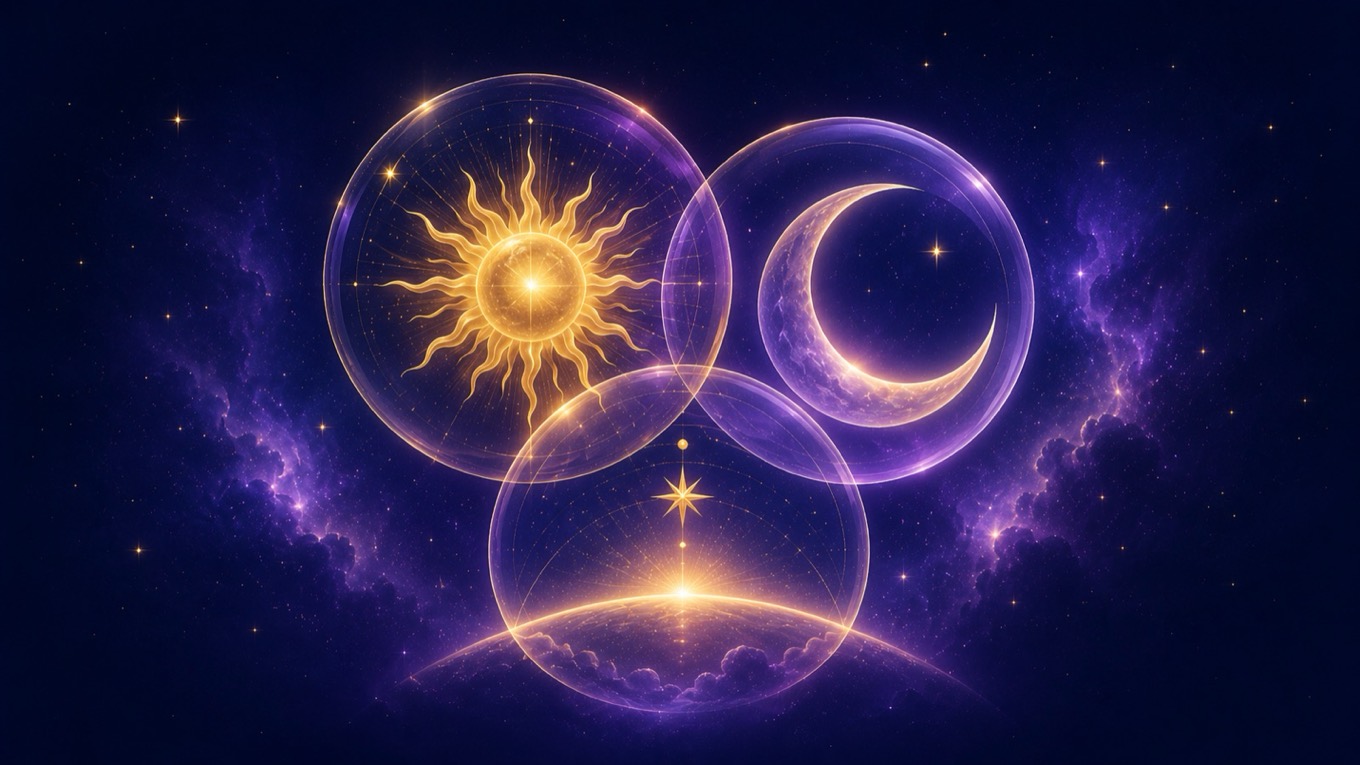
When people say "what's your sign," they almost always mean your Sun sign, the one based on your birth date that shows up in every generic horoscope column. That's real information, but it's only the headline of a much longer article. Your birth chart (also called your natal chart) is a snapshot of exactly where every planet was sitting in the sky the moment you were born. Three of those points do the heaviest lifting in shaping your personality, and astrologers nickname them the Big Three:
- Sun sign: your core identity, your ego, the "main character energy" of who you are becoming.
- Moon sign: your inner emotional world, the private self that only shows up with people you trust.
- Rising sign (Ascendant): the version of you the world meets first, your instinctive reactions and outer vibe.
Most people only know their Sun. That's like judging an entire book by its title. The Moon and Rising are the chapters that explain the plot twists, and once you know all three, your whole chart starts making a lot more sense.
All three placements come from the same source: the exact date, time and place you were born. That's what a natal chart actually is, a map of the entire sky at that one moment, frozen in place. Your Sun sign only needs the date. Your Moon and Rising need more precision than that, which is exactly why so many people know one and not the other two. It's not that the Moon and Rising are more advanced or more "real" astrology, it's just that they require information most of us were never handed as kids, unless someone happened to write down the clock time on our birth announcement.
Your Sun Sign: Who You Are at the Core
Your Sun sign is calculated from your birth date alone, which is exactly why it's the placement everyone already knows. It's your fundamental identity, the energy you're actively growing into over your lifetime. Think of it as your main quest rather than your whole personality. A Leo Sun wants to be seen and to create something worth remembering. A Virgo Sun wants things to actually work, to be useful, to get it right. Your Sun is less about how you act day to day and more about what you're ultimately here to become.
This is also why your Sun sign can feel like an oversimplified sketch of you. It's accurate, but it's the outline, not the finished painting. That's exactly where the Moon and Rising come in to color everything else.
Picture two Capricorn Suns. Both are driven, both take responsibility seriously, both quietly want to build something that lasts. But one has a Pisces Moon and a Leo Rising, so she comes across warm, expressive, a little dramatic in the best way, and cries at the drop of a hat when no one's watching. The other has a Virgo Moon and a Capricorn Rising, so he reads as reserved even to close friends, and needs total order before he can relax. Same Sun sign horoscope every day of their lives, completely different humans. That's the part a single horoscope can never capture.
What this means for you: Read your Sun sign horoscope as your long term theme, the arc of your year or your life, not a play by play of your Tuesday. If you want the daily texture too, that's where checking your full horoscope by sign helps fill in the gaps your Sun alone can't cover.
Your Moon Sign: Your Inner World
Here's a scenario. You meet someone new, you seem calm, upbeat, easygoing, total Gemini Sun energy. Three months later they see you crying at a candle commercial and clinging to routines like your life depends on them. That gap between "how you present" and "how you actually feel" is very often the difference between your Sun and your Moon.
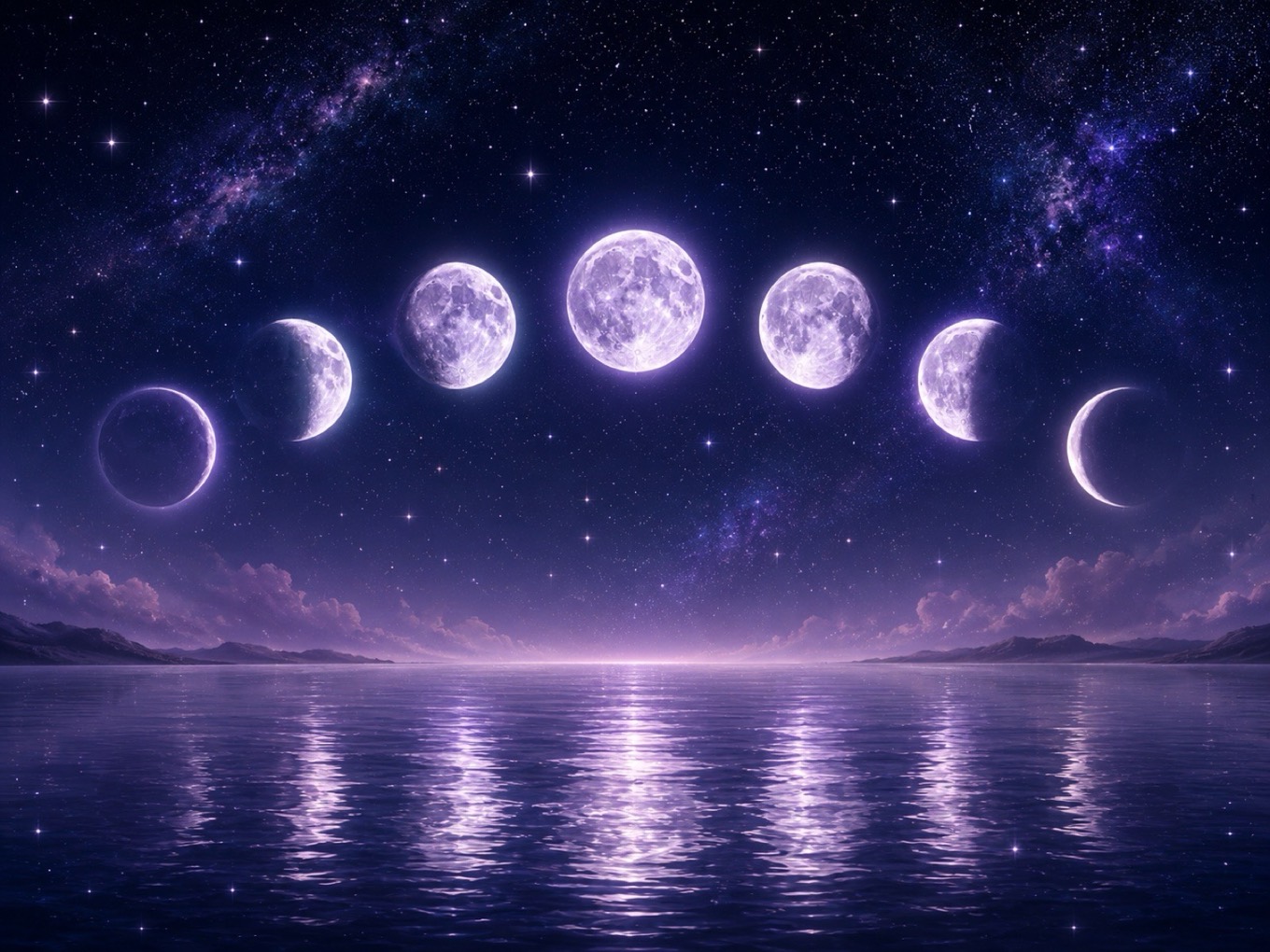
Your Moon sign governs your emotional instincts, what makes you feel safe, how you self soothe, what you need (not want, need) when things get hard. It's the part of you that mostly comes out at home, in close relationships, or late at night when the performance stops. A Sun in a bold, expressive sign can still have a Moon that craves total privacy and quiet. That's not a contradiction, that's just a fuller version of you.
Here's why your Moon sign takes more than a birthday to figure out. The Moon moves fast, orbiting through all 12 zodiac signs in about a month, which means it changes signs roughly every two and a half days. Two people born on the exact same date can have completely different Moons depending on the year, and sometimes even depending on the hour. This is also why so many people find their Moon sign to be the most "oh my god, that's exactly me" placement in their whole chart. It rarely gets diluted by a generic horoscope, so when you finally read an accurate description of it, it can feel almost uncomfortably specific.
Think about how differently a Moon in an emotionally expressive sign handles a bad day compared to a Moon in a sign that prefers to process quietly, alone, before talking about anything. Neither one is doing it wrong, they're just wired to recover differently. Once you know your Moon, arguments with partners, family dynamics and even your own "why am I like this" moments start making a lot more sense, because you're finally looking at the actual operating system instead of just the app icon on the home screen.
What this means for you: If your Sun sign horoscope never quite lands, your Moon sign is usually the missing translation. It explains your comfort zone, your triggers, and what "recharging" actually looks like for you specifically.
Your Rising Sign: The First Impression Everyone Meets
This is the one. If there's a single placement that changes how your entire chart reads, it's this one, and it's also the one almost nobody actually knows off the top of their head.
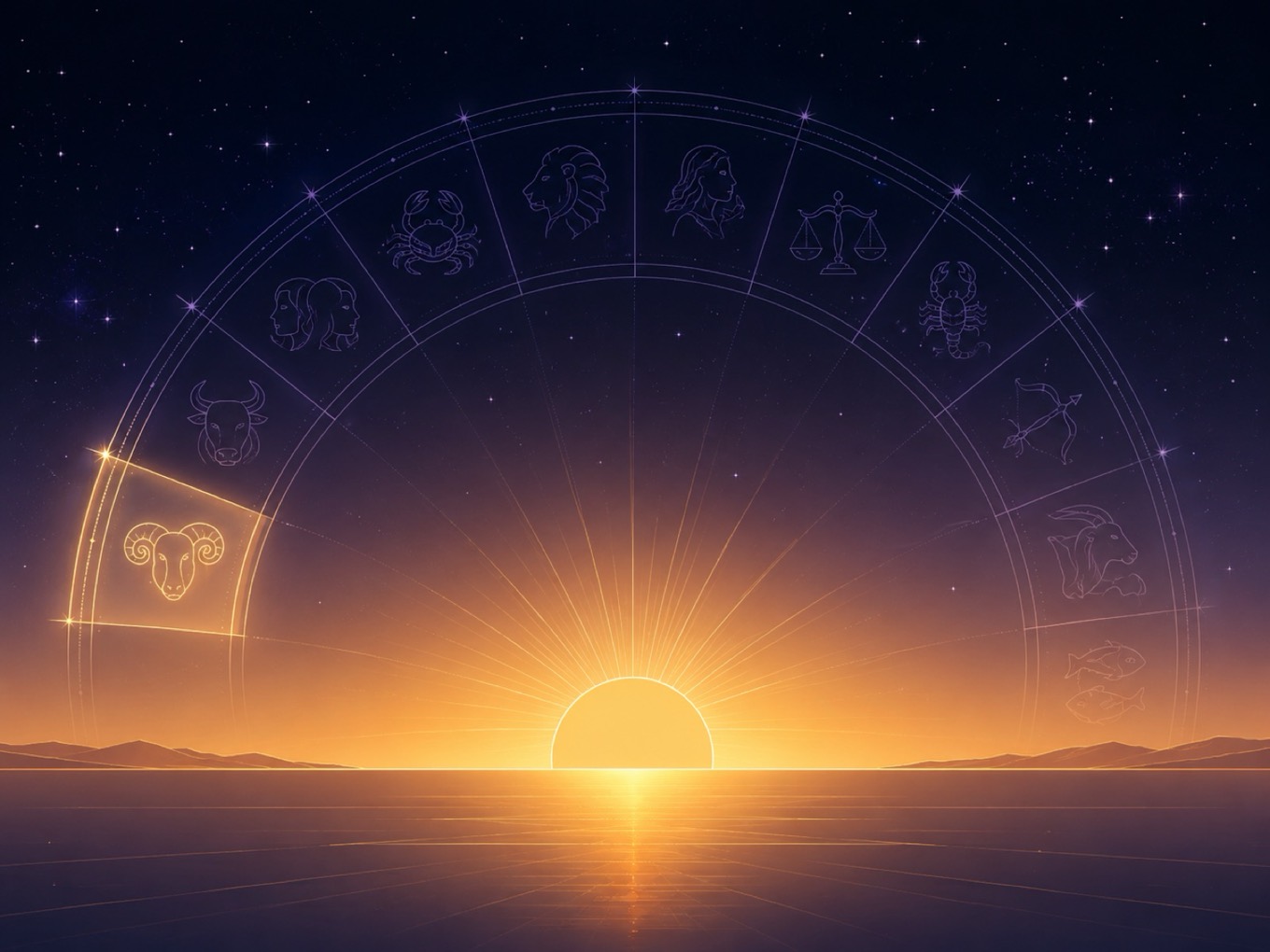
Your Rising sign, also called your Ascendant, is the zodiac sign that was rising on the eastern horizon at the exact moment you were born. It's not about who you are deep down (that's more Sun and Moon territory), it's about your instinctive first move, your outer energy, the vibe people clock about you within the first thirty seconds of meeting you. It shapes your mannerisms, your style, even your resting face. A shy, private Cancer Sun with a bold, magnetic Leo Rising can genuinely read as the most confident person at the party, until you actually get to know them.
Here's the plot twist we teased at the very beginning. If you've ever felt like your Sun sign description doesn't match "the you that other people describe," your Rising sign is very often the reason. It's the front door of your chart, the thing strangers, coworkers and first dates experience before they ever get near the Sun or Moon underneath.
So why does almost nobody know their Rising sign the way they know their Sun? Because it depends on your exact birth time, not just your birth date. The sky rotates through the entire zodiac roughly every 24 hours, which means your Rising sign can change approximately every two hours. Get the birth time wrong by even thirty minutes and you could land in a completely different sign with a completely different Ascendant story. This is precisely why Rising sign write-ups can't just be plugged into a generic horoscope calendar the way Sun sign ones are. It's also why so many people go their whole lives never actually knowing this placement, even though it's arguably doing the most visible work in how they come across.
Your Rising sign also tends to color your physical presence in ways people notice before they can even name it, your posture, your resting expression, the way you dress or walk into a room. It's less about mood and more about instinct, the automatic setting your body defaults to before you've had a chance to think about it. That's part of why meeting someone in person can feel so different from getting to know them over text. Text strips away the Rising sign almost entirely, and suddenly you're talking to a version of them that's closer to their Sun and Moon.
What this means for you: If you only know your Sun sign, you're missing the placement that most shapes your reputation, your first impressions and your natural "default mode" in new situations. This is also the placement people are most surprised by, and most obsessed with, once they finally learn it. Curious what your specific Rising sign says about you? We're covering all 12 in a dedicated Rising sign guide soon, sign by sign.
Sun vs Moon vs Rising: A Quick Comparison
| Placement | What It Rules | Where It Shows Up | The Question It Answers |
|---|---|---|---|
| Sun | Core identity, ego, life purpose | Long-term goals, what you're becoming, your "main character" arc | Who am I at my core? |
| Moon | Emotions, instincts, inner safety | Close relationships, private moments, how you self soothe | What do I actually feel and need? |
| Rising | Outer presentation, first impressions, instinctive reactions | New situations, first meetings, personal style, body language | How does the world experience me first? |
How Your Big Three Works Together
None of these three placements exist alone, and honestly, that's the whole point. Your Sun is the story you're writing, your Moon is how that story feels from the inside, and your Rising is how that story gets introduced to everyone else before they've read a single page. A Taurus Sun with a Sagittarius Moon and a Gemini Rising is going to feel and look completely different from a Taurus Sun with a Cancer Moon and a Capricorn Rising, even though they'd technically get "the same" Sun sign horoscope every single day.
This is exactly why generic, one-size horoscopes only ever get you partway there, and why the "why don't I relate to my sign" feeling is so common it's practically a rite of passage. The combination is the whole point. Your Big Three, plus the rest of your chart, is what makes your astrology actually feel like it's about you, specifically, instead of a description that fits a twelfth of the population.
The catch is that your exact Rising sign (and honestly, sometimes your exact Moon too, if you were born near a sign change) needs your precise birth time and location to calculate correctly, which isn't something you can eyeball from a birthday alone. That's the whole reason Soulra exists. Pop in your birth date, time and place once, and your full natal chart, Big Three included, gets calculated properly and explained in a way that actually sounds like you, not a textbook. If you've been carrying around a vague sense that "my sign doesn't really fit," this is usually the moment that closes the loop.
Frequently Asked Questions
What if I don't know my birth time?
You can still get a lot out of astrology without it. Your Sun sign is date-only, so that's unaffected, and your Moon sign is usually stable enough within a day that you can get a strong guess. Your Rising sign is the one placement that truly needs an exact time, since it can shift every couple of hours. If you don't have it, check your birth certificate or ask family.
Why don't I relate to my Sun sign?
This is one of the most common things people feel in astrology, and it almost always comes down to your Moon and Rising doing more of the visible work than your Sun does. Your Sun is your core identity and long-term arc, not your day-to-day personality or first impression. Once you add your Moon and Rising into the picture, most people find the "that's not me" feeling disappears fast.
Which of the Big Three matters most?
There's no single winner, they answer different questions. Your Sun shapes identity, your Moon shapes emotional needs, your Rising shapes first impressions and instinctive behavior. Depending on the situation, one placement can feel louder than the others, but a full picture always needs all three working together, not one standing in for the rest.
Can two people have the same Big Three?
It's possible, but genuinely rare, especially once you add exact degrees and the rest of the chart into the mix. Two people can share a Sun sign easily (roughly a twelfth of the population does), but matching Sun, Moon and Rising all at once usually means they were born on a similar date, in a similar year, close in time and in a similar location.
How do I find all three of mine?
You'll need your birth date for your Sun, and your birth date plus a reasonably accurate time and location for your Moon and Rising. From there, a natal chart calculator does the math for you using the position of the sky at that exact moment. Soulra calculates all three (and your full chart) automatically once you enter your birth details.
Ready to Meet Your Whole Chart?
Your Sun sign was never the wrong answer, it was just the first sentence of a much longer one. Your Moon fills in how you actually feel, and your Rising explains how you show up before anyone even gets that far. Put together, they're a much closer match to the actual, specific, slightly contradictory person you are. Curious how your Big Three combine? Get your personalized reading in the Soulra app and see your whole chart explained in a way that finally sounds like you. And if you're curious how your placements line up with someone else's, our compatibility hub breaks that down too.
This article is for entertainment and self-reflection purposes only and isn't a substitute for professional advice.
Go deeper in the app
Your chart, daily readings and a chat with Ra, your personal astrologer.
Download on App StoreSoon